
Written Once, Proven Forever
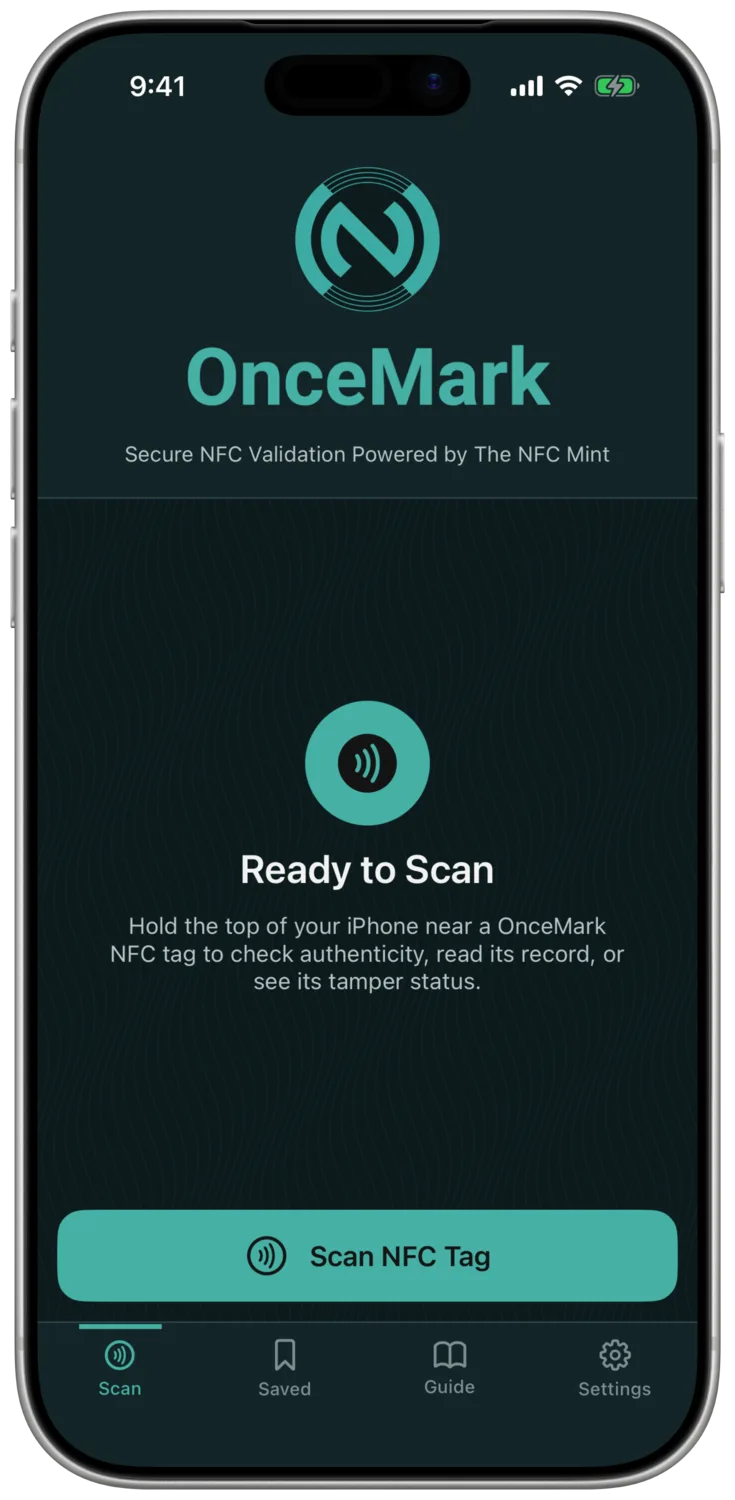
OnceMark tags contain a secure NFC chip that generates a new cryptographic code on every scan. Write your product's record onto the tag once, permanently. Anyone who scans it sees a genuine tag and the record you wrote.





How It Works
Write the Record
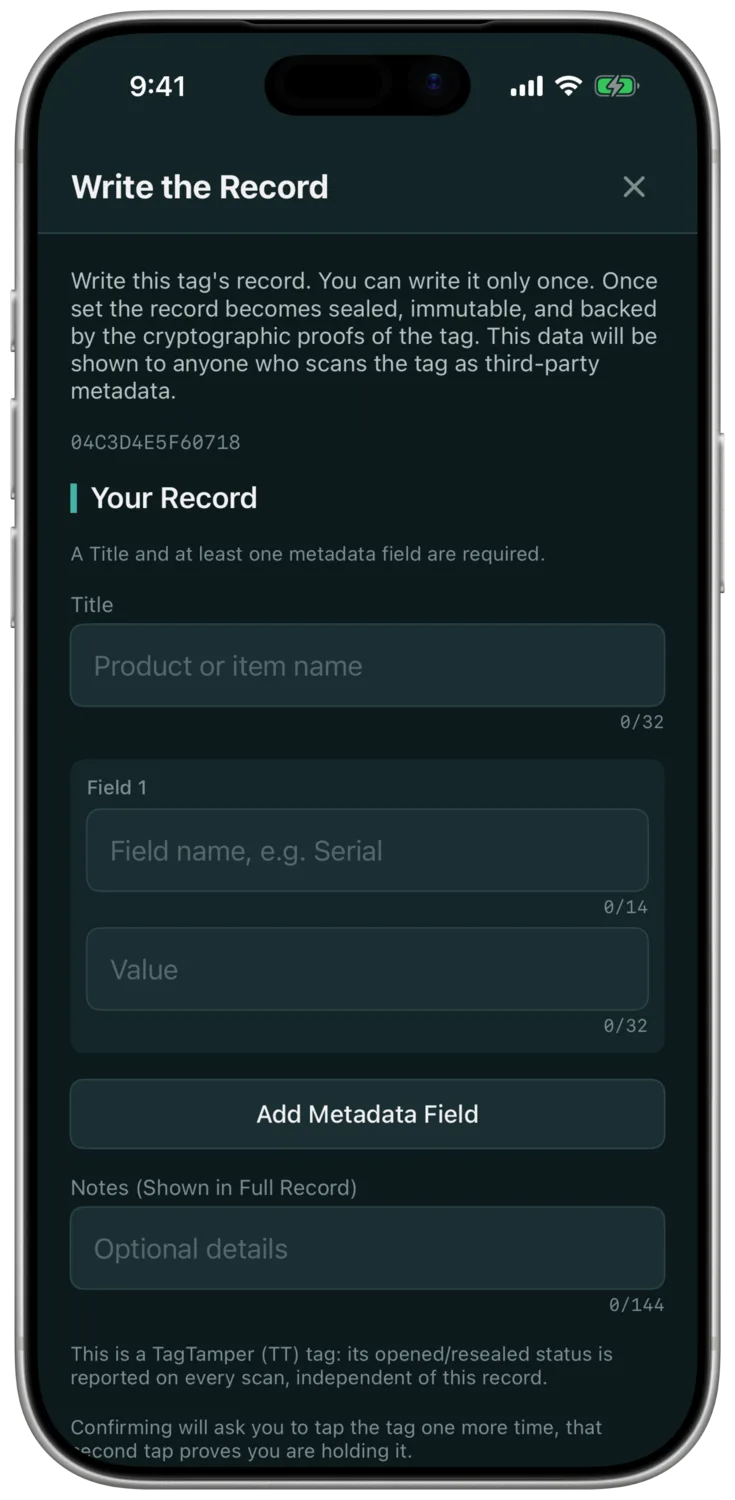
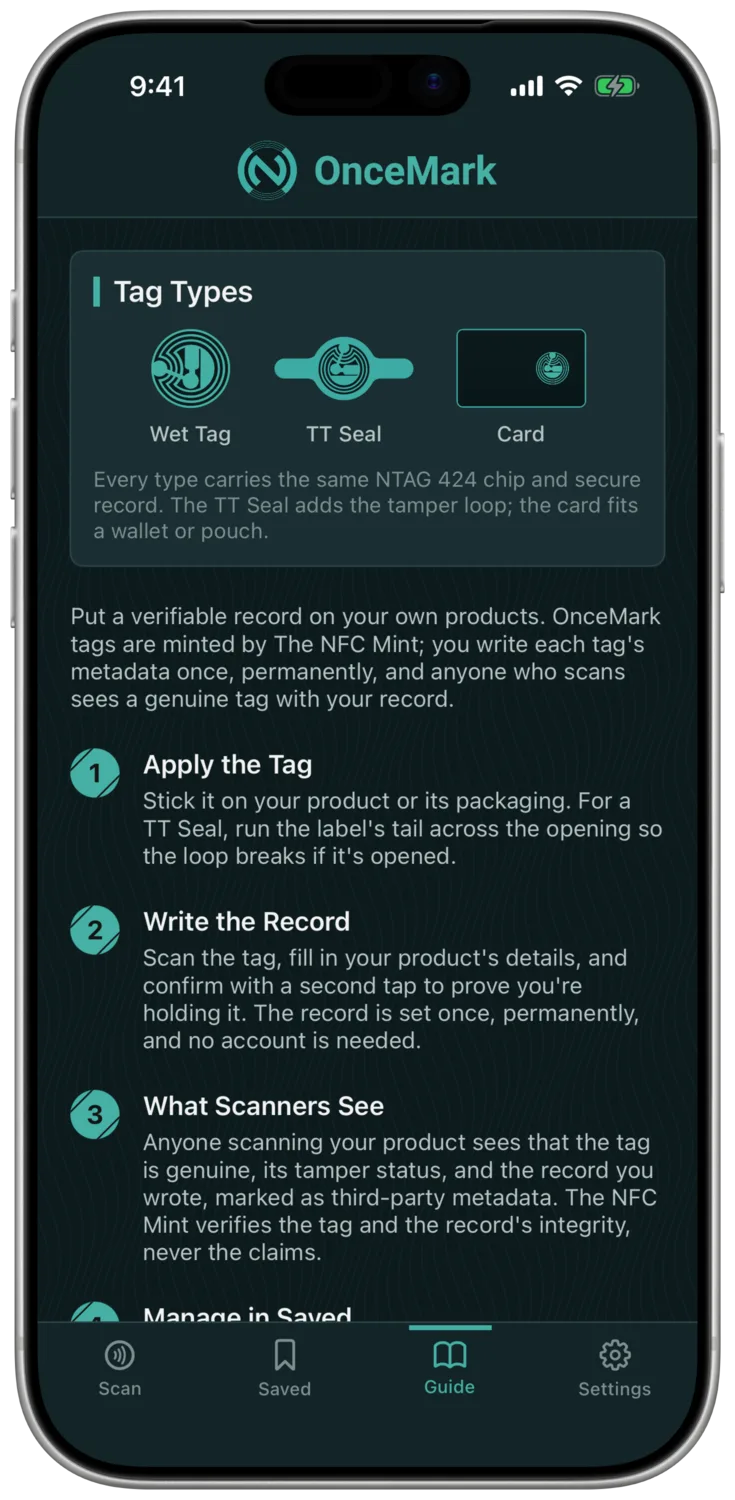
Tap an unused tag in the OnceMark app and write your product's record (a title, a serial, a batch, notes). It is written once and becomes sealed and immutable. No codes, no sign-up. Holding the tag is the only key.
Attach It
Fix the sticker to your product, or seal its packaging with a TagTamper (TT) label. Your record travels with the item. Every scan is authenticated by The NFC Mint validation service.
Anyone Can Check It
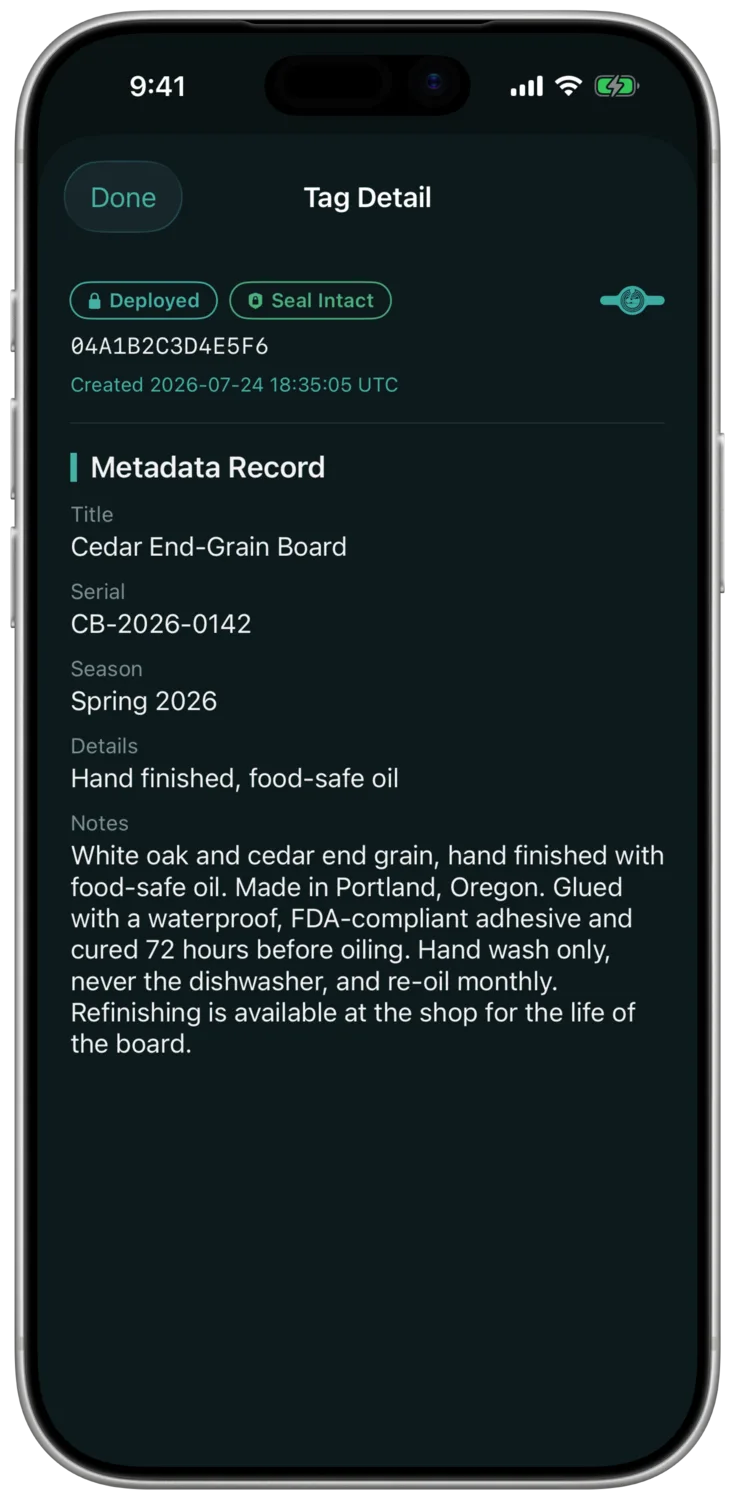
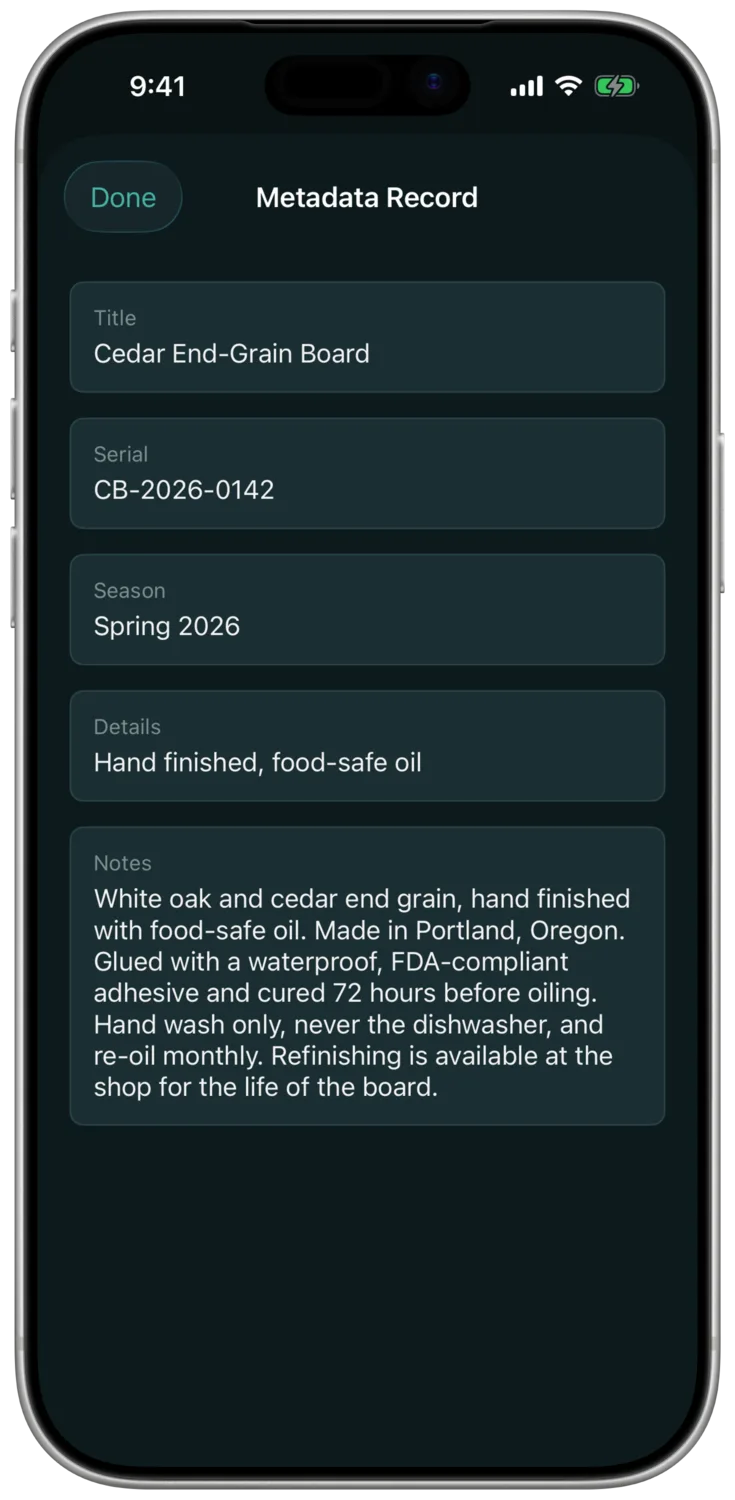
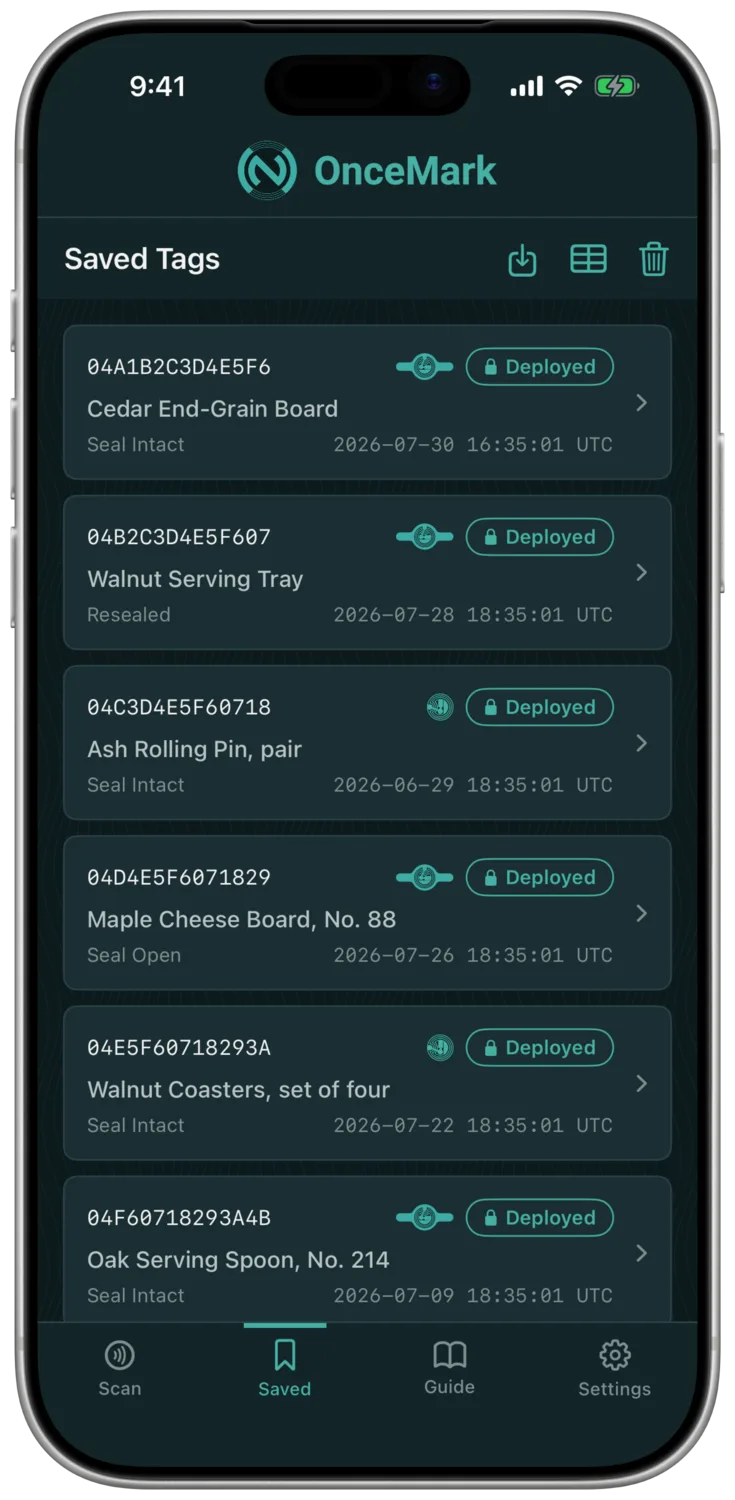
A buyer taps the tag with any NFC phone. The NFC Mint validation service confirms the chip is genuine and shows the record you wrote, word for word, in a clearly marked third-party metadata box. No name is attached because we never collected one. On a TagTamper (TT) label the seal status shows intact, opened, or opened-and-re-glued.
Tag Options
| Capability | Standard | TagTamper (TT) |
|---|---|---|
| Cannot Be Copied, Photographed, or Reprinted | Yes | Yes |
| Identifies the Exact Unit, Not Just the Model | Yes | Yes |
| Every Scan Verified | Yes | Yes |
| Chip-Recorded Proof the Seal Was Ever Opened | No | Yes |
| Detects a Re-Glued or Re-Taped Seal | No | Yes |
The TagTamper (TT) variant is a 25×50 mm tamper-evident label built on the NXP NTAG 424 DNA TT chip. Its tamper loop runs through the label's tail, which you place across the packaging opening. On every scan the chip reports two facts inside its cryptographically authenticated response: whether the seal has ever been opened (recorded permanently the moment the chip is powered with a broken loop) and whether it is open right now. A seal that was cut and glued back reads "opened, currently closed." Choose TagTamper (TT) when your product ships in packaging that should arrive unopened; the standard 25 mm round sticker covers everything else.

See It in Action
Specifications
| Standard | TagTamper (TT) | |
|---|---|---|
| Chip | NXP NTAG 424 DNA | NXP NTAG 424 DNA TT |
| Label Size | 25 mm round | 25×50 mm (D×L), tamper-evident material |
| Tamper Detection | None | Once-opened (permanent) and current-status loop detection |
| Protocol | ISO/IEC 14443-A, NFC Forum Tag Type 4 (13.56 MHz), read range up to 10 cm | |
| Cryptography | AES-128 with SUN message authentication on every read; ECC originality signature; Random ID and encrypted UID options that keep a sealed package from being scanned to identify the tag inside | |
| Endurance | 50-year data retention; 200,000 write cycles; operating range −20°C to 50°C | |
A Record Anyone Can Read
Your record is public by design and anonymous by construction. Any NFC phone shows it on scan, no app and no account needed, rendered in a clearly marked third-party metadata box with our own catalog data suppressed so only your words appear. There is no author name anywhere because we never collected one. The scan page states plainly that The NFC Mint does not vouch for the accuracy of the metadata. What makes the record credible is not a byline. The chip's per-scan cryptographic code proves the tag is genuine, and the record's permanence proves nobody changed it after the sale.
Behind it, The NFC Mint validation service authenticates every scan. A record is written once. Database triggers refuse edits and deletes, so nobody, including us, can change or remove it afterward. The moment a record is written, a trigger copies it into a separate audit log, and once an audit row is three days old an hourly export uploads it to off-site storage under a separate credential. A changed record would disagree with its audit copy.
Frequently Asked Questions
Who can see my record?
Everyone. That is the point. OnceMark records are public product records, shown to anyone who scans the tag. Write only what you want the world to read. If you need a private record instead, that is our TamperKit product.
Can I edit or delete a record later?
No. A record is written once and sealed permanently. The database refuses both edits and deletes by trigger, so nobody, including you and including us, can quietly change or remove it after the sale. That immutability is what makes the record credible to a stranger.
How do I know the record hasn't been changed?
Two separate mechanisms would each have to fail. First, the database refuses edits and deletes; triggers reject every attempt to modify or remove a record after it is written, including attempts by our own software. Second, the moment a record is written, a trigger copies it into a separate audit log, and once an audit row is three days old an hourly export uploads it to off-site storage under a separate credential. A changed record would disagree with the audit copy.
Do I need an account or a code?
No. There is no login, no sign-up, and no code to type. OnceMark never collects who you are. Physically holding an unwritten tag is the only key, and the first record written into it is permanent. You buy the tags and you are done.
What if a tag already carries a record when I open the pack?
Do not use it; that pack was opened before it reached you. Every pack ships physically sealed, and a tag can only be written once, so a pre-written tag is itself proof of tampering. Return the pack for a refund like any other damaged product.
How is OnceMark different from TamperKit?
Same secure chips, opposite audience. TamperKit is for sellers fighting return fraud. Its record stays private to the activator and is disclosed only in a dispute. OnceMark is for makers marking their work. Its record is public and every scanner sees it.
Can someone copy my tag onto a counterfeit?
No. The chip generates a fresh cryptographic code on every scan, so a photograph, a reprint, or a cloned NFC sticker fails verification. Each tag also identifies its exact unit, so one genuine tag cannot vouch for a production run of fakes.